
I want to When I first started walking for my health, a slow lap of the local park felt like a proper outing. These days, my weekend walks stretch to 10 or 15 kilometres, and I’ve even completed a half marathon through London at night. Looking back, no other habit has changed my health quite so much.
Better still, it hasn’t cost me a penny. There’s no gym membership, no special kit and no complicated routine. All you need is a decent pair of shoes and the will to step outside.
In this post, I’ll share the benefits of walking I’ve noticed in my own life, what the research says, and how to make a start this week.
❤️ A Stronger Heart, One Step at a Time
Your heart is a muscle, and it responds to regular use like any other. Research has long linked walking with lower blood pressure, better circulation and a reduced risk of heart disease and stroke.
You don’t need to walk for hours to see results. Around 30 minutes a day, most days of the week, makes a real difference. Personally, I noticed I could climb hills without stopping within a couple of months. That alone felt like proof that something inside was getting stronger.
⚖️ Weight and Blood Sugar
Our metabolism slows as we age, so weight can creep up even when our habits barely change. Walking helps tip the balance back without punishing the joints.
A brisk walk also helps the body manage blood sugar, which lowers the risk of type 2 diabetes. On its own, it won’t undo a poor diet. Alongside sensible eating, though, it makes a steady and noticeable difference.
🦵 Muscles, Joints and Balance
From middle age onwards, we gradually lose muscle and bone unless we keep using them. Left alone, that leads to weakness, wobbly balance and a higher risk of falls.
Walking pushes back against all of this. Every step loads your bones, works the muscles around your knees and hips, and trains your balance. Uneven footpaths are especially good, because your body constantly adjusts to the ground beneath you.
For even better results, combine your walks with some strength training after 50. Together, they make a powerful pair for staying steady and independent.
🧠 My Most Reliable Mood Fix
This benefit surprised me more than any other. Whenever I feel low or restless, a walk lifts my mood more dependably than anything else I’ve tried.
Movement releases feel-good chemicals, while daylight and fresh air add their own calming effect. Studies have linked regular walking with lower stress and fewer symptoms of anxiety and depression.
On grey days, I’ve stopped asking myself whether I feel like going. Instead, I simply put my boots on and head out. Within ten minutes or so, my thoughts usually feel lighter.
😴 Deeper Sleep
Many of us sleep less soundly as we get older. We take longer to drift off, wake in the small hours, or rise far earlier than we’d like.
Walking helps on two fronts. It eases stress, and it leaves you with a healthy physical tiredness by bedtime. Since my weekend walks grew longer, Saturday nights have become my best sleep of the week.
🤝 Company on the Footpath
Loneliness can quietly harm our health in later life, so the social side of walking matters more than people think. A walk gives you a natural reason to get out and see the world.
You might join a local walking group, ask a neighbour along, or simply swap a cheery hello with other walkers. On my regular routes, I now recognise plenty of familiar faces. Those small moments of connection add up over time.
🧬 Keeping the Brain Sharp
Walking boosts blood flow to the brain, which helps keep memory and thinking sharp. Research suggests that active older adults have a lower risk of cognitive decline and dementia.
Of course, walking isn’t a guarantee. Still, it’s one of the simplest things we can do for our brains, and it comes bundled with every other benefit on this list.
🍂 Walking Through the Seasons
Darker evenings and colder mornings make it tempting to hang up the boots until spring. In my experience, though, autumn and winter walks can be the most rewarding of all. Crisp air, empty paths and a warm drink afterwards take some beating.
The key is to dress in layers, pick daylight hours where you can, and wear something bright if light is fading. For more ideas, see my guide to staying active in winter.
👟 How to Start Enjoying the Benefits of Walking
Starting is refreshingly simple. Here’s what worked for me:
- Begin with ten minutes. Gradually add a few minutes each week as your stamina grows.
- Invest in good shoes. Supportive footwear prevents blisters, aches and injuries.
- Drink water. Have a glass before you set off, and carry a bottle on longer walks.
- Find routes you love. Parks, canal towpaths and countryside trails all keep things interesting.
- Set a gentle goal. A local charity walk or a favourite viewpoint gives you something to aim for.
If you listen to music or podcasts, keep the volume low enough to hear traffic and cyclists.
🏁 The Simplest Habit I Know
Walking strengthens your heart, steadies your weight, protects your joints, lifts your mood, improves your sleep and sharpens your mind. Remarkably, it does all that for free.
If your joints would prefer even less impact, swimming offers many of the same rewards in the water. And if you ever fancy picking up the pace, you can read how I made my own running comeback after 60.
So, how about you? Do you have a favourite walking route, or a walk that changed how you feel about exercise? Tell me in the comments below.
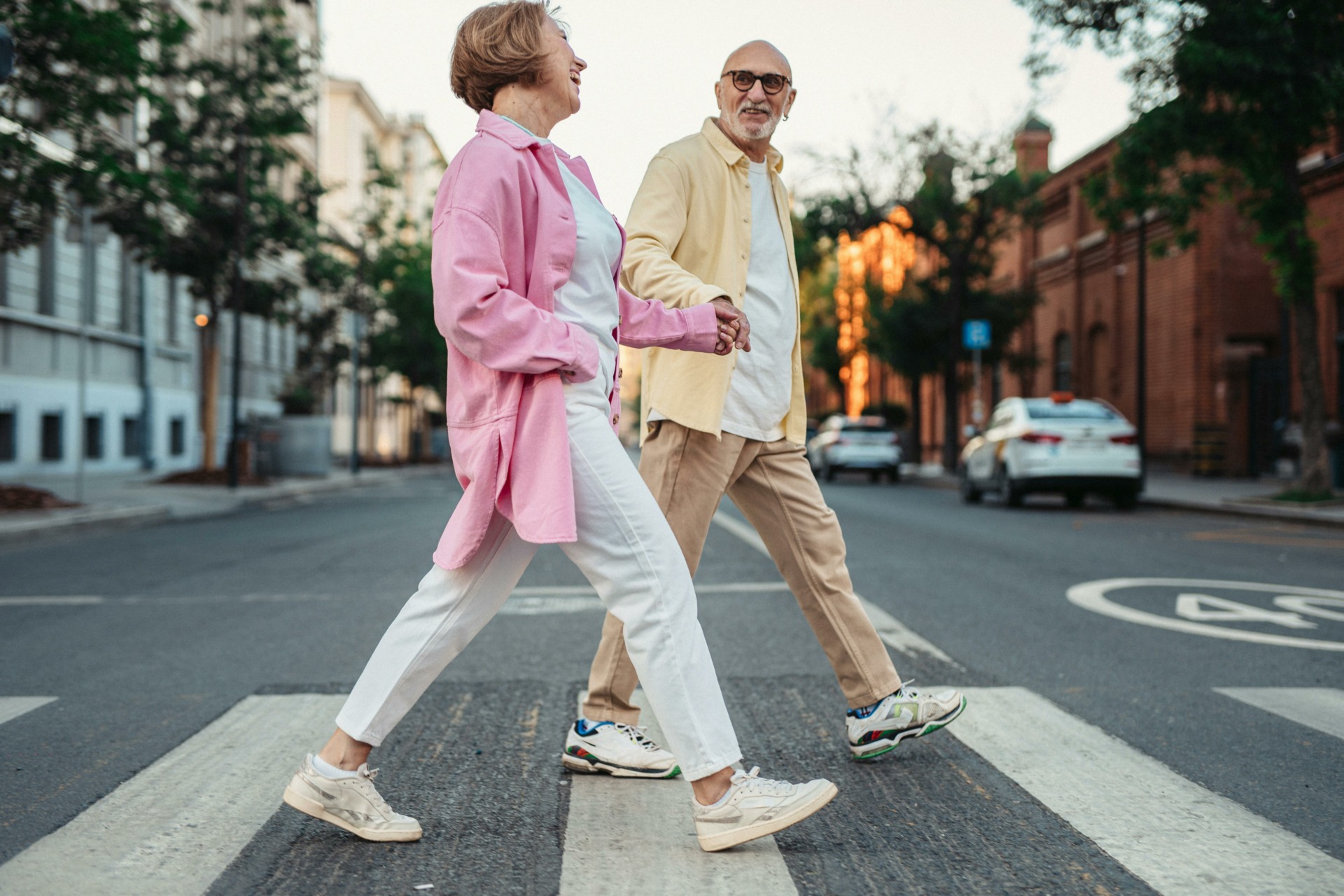
Photo by SHVETS production: https://www.pexels.com/photo/happy-elderly-couple-holding-hands-while-crossing-on-the-pedestrian-lane-8972263/