

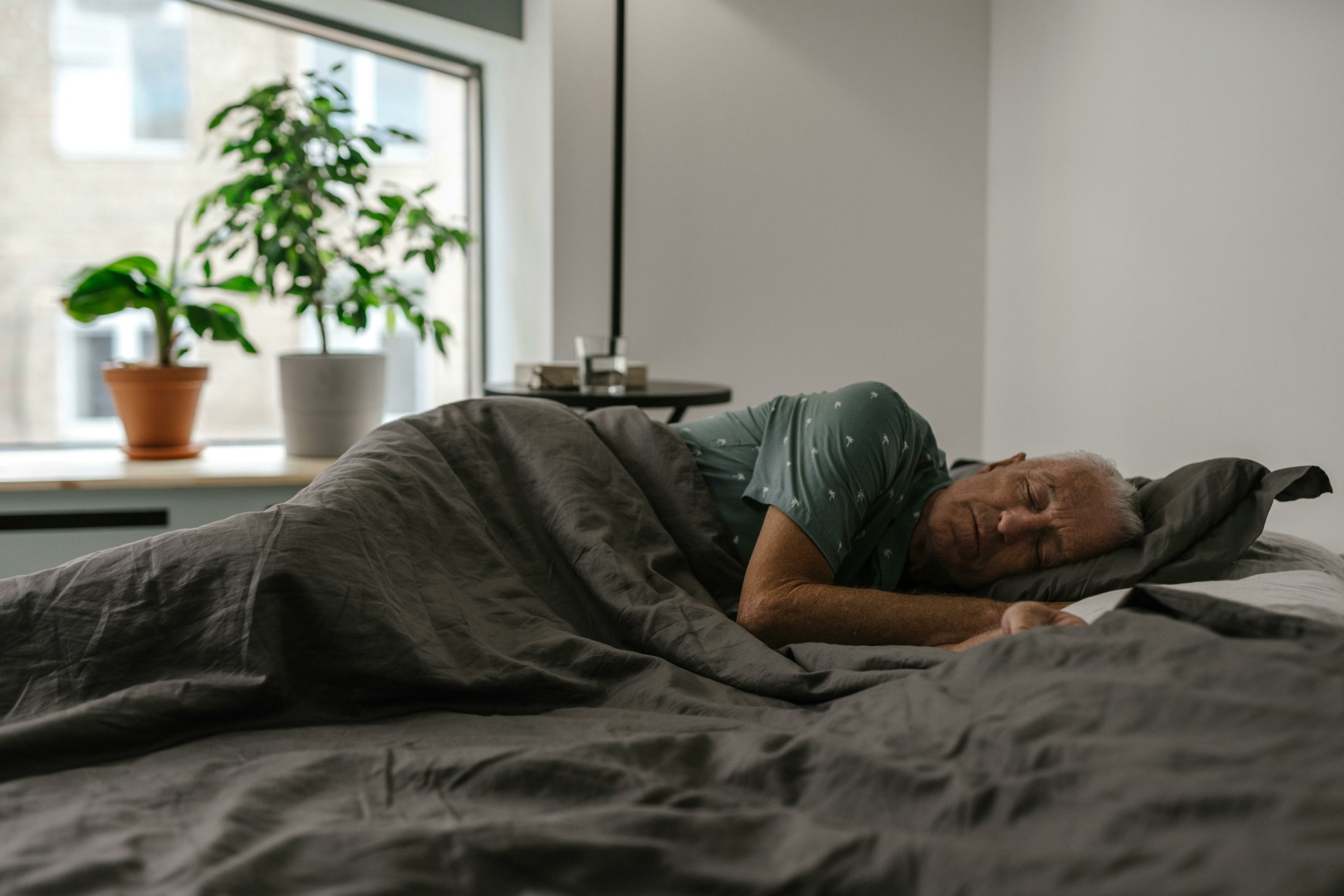
Let me be brutally honest with you. Sleep after 60 is not the same game it was in your 40s – and for most of my 50s, I was playing it completely wrong. Five or six hours? Fine. Staying up until midnight scrolling? No big deal. I’ll catch up at the weekend. 😅
It turns out I was absolutely wrong, and the science is here to prove it. After everything we’ve talked about on this blog – the keto journey, the weight training, the supplements, the gut health – I’ve come to believe that sleep is the single most powerful lever we can pull for our wellbeing after 60. And most of us are getting it badly wrong.
😴 Why Sleep Changes After 60 – and It’s Not Your Fault
Here’s something nobody told me: our bodies genuinely change how they handle sleep as we age. Our circadian rhythm – that internal body clock – shifts earlier, so we feel sleepy sooner in the evening and wake earlier in the morning. Our production of melatonin (the “darkness hormone” that triggers sleep) naturally decreases. Deep, restorative sleep – what scientists call Slow-Wave Sleep – becomes shorter and harder to reach.
So if you’re waking at 5am feeling groggy, or lying awake at 2am with a mind that won’t switch off, you’re not broken. Your biology has just changed the rules on you. The good news? Once you understand the game, you can play it a whole lot better. 🎯 A few rounds of slow breathing exercises can also quiet a racing mind at bedtime.
🧠 What Sleep Actually Does for Us
I used to think sleep was just… rest. A battery recharge. But it’s so much more than that.
While we sleep, our brains run a literal cleaning cycle – the glymphatic system flushes out metabolic waste products, including the proteins associated with cognitive decline. Poor sleep over years has been linked in research to significantly higher risks of memory problems down the line. That got my attention fast.
On top of that, deep sleep is when our bodies do the serious repair work – muscle recovery, hormone regulation (including growth hormone and testosterone), and immune system maintenance. When I started taking sleep seriously, I noticed my post-workout recovery improved noticeably. Not because I changed my training, but because I finally let my body do its overnight job properly. 💪
🕰️ My Practical Circadian Reset – What Actually Worked
The biggest single change I made was anchoring my wake time. I get up at the same time every morning – weekends included. No more lie-ins. I know, I know – it sounds brutal. But this one habit re-synchronised my internal clock faster than anything else I tried.
Here’s what else I’ve built into my daily routine to support better sleep after 60:
- Morning light, first thing. Within 20 minutes of waking, I’m outside or near a bright window. Even on grey British mornings (which is most of them! 😄), natural light sends a powerful “day has started” signal to the brain and anchors your melatonin rhythm for the evening.
- The kitchen closes at 7pm. Eating late was messing with my core body temperature and blood sugar overnight. Since moving dinner earlier – especially with my lower-carb approach – I fall asleep faster and wake up far less groggy.
- Blue light curfew. Phone and laptop go away an hour before bed. My brain actually winds down now instead of arriving at bedtime in a state of artificial alertness.
- The bedroom is a sleep sanctuary. Cool, dark, and quiet. I invested in decent blackout curtains and it made a bigger difference than I expected.
💊 Should You Supplement for Sleep?
This one I explored carefully. A few things have genuinely helped me:
Magnesium glycinate – taken about an hour before bed. This form is gentle on the gut and has been a game-changer for the “racing mind” problem I used to have at night. Many of us are chronically low in magnesium and don’t know it.
Low-dose melatonin – and I mean low dose. We’re talking 0.5mg, not the 5mg or 10mg tablets you see everywhere. Research suggests smaller doses actually work better for resetting the clock rather than knocking you out.
A word of caution – always run supplements past your GP, especially if you’re on any medication. This is what works for me; your picture may be different. ⚕️
🥩 The Low-Carb Sleep Connection
Here’s something I didn’t expect when I shifted to a lower-carb, higher-fat diet: my sleep improved. The blood sugar stability overnight makes a real difference – no more waking at 3am with a cortisol surge driven by a blood sugar dip. I sleep through now, which was rare before.
The caveat: going too low on carbs in the evening can occasionally make it harder to fall asleep for some people. A small amount of complex carbs at dinner – sweet potato or legumes – can help the body produce serotonin, a precursor to melatonin. It’s about finding your personal sweet spot. 🍠
🚶 The Exercise and Sleep Connection
Regular movement is one of the most proven ways to improve sleep after 60. But timing matters. I aim to finish any vigorous training by early afternoon. Evening walks, however, are brilliant – they lower cortisol, help regulate blood pressure, and the fading light signals to your brain that the day is winding down. A 20-minute stroll after dinner has become one of my favourite habits. Meditative, digestive, and deeply restorative. 🌆
🏁 The Bottom Line
Sleep isn’t passive. It’s the most active recovery process your body has, and getting it right won’t just make you less tired – it will make your exercise more effective, your diet work harder, your brain sharper, and your mood more resilient. If you want the full checklist, see our guide to sleep and healthy aging.
I wasted years thinking I could outrun a bad night’s sleep with an extra coffee. I can’t. None of us can. ☕🚫
Start with just one change this week – pick a fixed wake time and stick to it for seven days. Then let me know how you get on! Drop a comment below, I read every single one. 👇
Photo by SHVETS production: https://www.pexels.com/photo/an-elderly-man-sleeping-on-bed-8899465/